Showing posts with label Life. Show all posts

Wednesday, December 2, 2009

Jus' Sayin'


When medicine -in this day & age- has to deal with a pile of "medical" garbage magically transmuted into "real" medicine in the mind of a political hack...


it's no wonder that real scientists and researchers who spend endless hours, blood, sweat and tears at work...that are hit again and again with the cold whip of comunal criticism, sometimes dispair...


Especially, when all you need to "educate" the masses is to claim to see the "answer"...and if your bullshit is good enough, fanning the flames of madness can be had with but the conjured image of an idea...


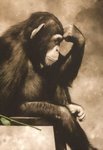
Noble reflection of reality and inner knowledge....an intimate connection to THE answer for us all?...


Wednesday, July 15, 2009

Types of Truth...

In a strange way, the truth or "Truth" can have a degree of fuzziness depending on ones perspective. It comes in and out of focus based on the lens one chooses to view it through. In other words, some things are truer than others.

The evolving mind has come up with an intriguing description of this phenomenon and -if nothing else- helps structure this concept so that certain beliefs and philosophies can be categorized more clearly. For example reagrding reality, some points of view concentrate on a tree, others embrace the forest, while others don't even look at trees and concetrate on the "idea" of a tree and still others distill their observations to the worship of scratches and scribbles with no trees in sight.

1. personal truth
A personal truth is what is true for an individual. Personal truths reflect physiological attributes, psychological tendencies and the learning and experiences of an individual.

2. social truth
A social truth is what a distinct group perceives to “be so.” Social truths reflect group history, customs, and values.

3. human truth
A human truth reflects and pertains to the universal dispositions and abilities of our species, Homo sapiens.

Many things that we consider to be inherently true probably reflect distinctive features of human psychology. For instance, because human beings are primates that readily establish and acknowledge dominance hierarchies, the human individual may be predisposed to feeling that there is or could be some entity “greater than me,” whether or not that happens to be true.

4. universal truth
A universal truth is one that all sufficiently intelligent and educated observers, from this planet or any other (should they exist), would conclude to “be so.” For instance, the proportion of a circle’s circumference to its diameter is 3.141592 ( . . . ). This is a universal truth. Any capable, unbiased individual could verify that truth.

A universal truth is the only type of truth that is not relative to the person or group making the claim. Science, by and large, provides us with universal truths. Or it at least aspires to.
Religion, no doubt, reflects social truths, and perhaps, in some regards, human truths as well.

So, this doesn't validate in and of themselves the "new age" philosophies, religions nor postmodernism for example as reality. These edifices are mostly human constructs:

What believers in a religion frequently fail to do is to place possible human truths and their own social truths into a wider perspective.

Good or bad, they are chained and bound well within the subjective bounds of humanity whereas reality expands beyond this realm. Obviously, there may be utility in some of these perspectives, but always if their limitations are acknowledged.

These perspectives or tools work better -if they work at all- at a different level and may or may not reflect reality in a hit or miss sort of way. On the other hand, from a humanistic perspective many of these constructs can serve as useful bridges between us and reality -but again with the caveat that they need to be kept in check.

Reality itself -to an extent- may always be beyond our reach, but there are ways to embrace its essence and approximate an understanding of how things truly are. Here is where the self effacing and correcting community based methodology -science- has proven its worth. It has proven to date to be the most objective human tool available to consistently touch "her" true face.

Acknowledging our humanity in the light of whatever wonders we discover keeps us humbly grounded to ourselves and who we are - just highly social primates on a tiny pale blue dot.

Thursday, January 29, 2009

"Storm" live by Tim Minchin


Just too good to let slip by....
Tim Minchin graciously provided for purview a wonderful live version of STORM
(lyrics posted here).

Enjoy....

Wednesday, January 28, 2009

Cectic on skepticism

WildEarth


....live and close up

The WildEarth.TV site is a great way to experience the fascinating world of the African wild in an intimate and interactive way.

"LIVE wildlife broadcasting is set to become an important part of natural history TV, why not join the experts and help make the revolution a reality ... it's in your nature."

Very cool!

Elevating Science, Elevating Democracy

Very nice and well written piece in the New York Times.

"The knock on science from its cultural and religious critics is that it is arrogant and materialistic...So the story goes...But this is balderdash. Science is not a monument of received Truth but something that people do to look for truth."

Sunday, January 4, 2009

World of the small

Every now and again, the MSN home site presents some interesting stuff that's relatively free of the medias general tendency to -all too commonly- report sciency things in a short sighted dim witted sort of way.

Here is a fascinating exposition of winning images from Nikons annual small world phot0micrography competition. Check it out!

Some of my favorites:

Artists rendering of an alien cyborg? Actually a chicken embryo photographed at 6X. ( by Tomas Pais de Azevedo of Lisbon, Portugal, using stereomicroscopy.)

A Borg mother ship? Really, a 14x image of rare mineral called arsenuranospathite. (It was submitted by Stephan Wolfsried of Germany.)

Rows of towels hanging in the midst of some Florence neighborhood? No, this beauty is a 100x magnification of scales on the wing of Urania riphaeus, the sunset moth. (The fiber-optic illumination was submitted by Charles Krebs from Issaquah, Wash.)

Saturday, January 3, 2009

A myth busters' obsession


Adam Savage of “Myth Busters” fame demonstrates, in this talk, some of the qualities that define the essence of human inquiry and discovery so crucial to authentic enlightenment. Could this be called a healthy obsession? Yep…and the type of focus and energy needed to look under the mask of mystery to reveal untold riches of knowledge.

Tim Minchin asks at the end of his beautifully brutal deconstruction of credulity in his poem “Storm”,

Isn't this enough? Just, this world? Just this Beautiful, Complex, Wonderfully Unfathomable, Natural, World? How does it so fail to hold our attention that we have to diminish it with the invention of cheap man-made myths and monsters?”

Indeed. One wonders if the opiate of the masses –credulous belief- will ever be put back on the shelf of human character quirks’. Perhaps still vital to a degree, but best taken off the pedestal it’s on.

(hat tip Bad Astronomy)

Friday, January 2, 2009

Understanding Chopra woo


Another reason to support separation of "church" and medicine...
Being that there are a lot of folks who think Dr. Chopra has unique qualifications and solidly researched support for his quest to "integrate" scientific medicine with whispy shades of a strange belief based system -religion- here are two well put together posts regarding Deepak Chopras modus operandi.

"Chopra is a doctor, supposedly, but every time I read something by him that touches on biology, he sounds as ignorant as your average creationist. He also writes incredibly poorly, bumbling his way forward with a succession of unlikely and indefensible claims. "

Skeptico 2005
"Skepticism has become a legitimate form of inquiry that Deepak parenthetically acknowledges (in a left-handed sort of way) as occasionally laudable, another refrain we often hear in the form of “I’m a skeptic too, but…,” where skepticism is fine as long as it is someone else’s codswallop under the microscope."

It is important to note that Chopra, over the years, has developed whole made up world views from stunningly naive, flimsy and often outright wrong assumptions about the actual nature of phenomena around him.

Mind you he has said some pretty interesting things regarding human wisdom and how we can all get along but this guy is just as fallible and screwed up as any of us. He really needs to get off that high horse and admit it though.

If Chopra wants to promulgate a belief system, that's fine. What he can't -or at least shouldn't be aloud to do- is force this system on everybody else. This is exactly what he would like to do imposing "magic" based medicine onto science based medicine.

He should just get real, put on a priest robe, stick to teaching ancient Hindu wisdom and call it good.

Tuesday, November 4, 2008

On the critical need for an educated populace and transparent government


"A popular government without popular information or the means of acquiring it, is but a Prologue to Farce, or a Tragedy, or perhaps both. Knowledge will forever govern ignorance. And a people who mean to be their own Governors, must arm themselves with the power which knowledge gives."

-James Madison

Vote

Here in colorado we were able to cast our vote a while ago and many of us did.

For those who haven't or couldn't today is THE day. It looks like the country is in for a big turn out and history is in the making whatever your choice.

Hopefully you've considered the issues through all the sophistry and rhetoric.

Hopefully reason, inclusion and clear thinking surface as the new focus for national governance.

Hopefully most of us will excersize our basic civic duty and VOTE.


Thursday, August 14, 2008

The science of economy

The process of learning necessarily implies that any held opinions and concepts need to be continually examined, re-examined and -in light of new information- often modified or expanded upon to better fit a larger picture of understanding. This takes time, leads to many twists & turns and can frustrate a lot of people!

For example, it can put one at complete odds with a "faction" of people and yet alternatively, at other times, in solid agreement with that same crowd. This goes for a plethora of 'categorized' groups- many of whom are polar opposites of each other! Granted, there are always those folks with whom the only thing you ever find in common with is the air that’s breathed!


On the one hand, we need to acknowledge and consider solid reasoning while, on the other hand, take issue with hubris & bullshit no matter the origin- be they liberals, conservatives, independents....neocons, neosocialists, neoluddites, isolationists, consumerists, comunalists,...theocons, fundies, dogmatists, apologists... bioluddites, nihilists, primitivists, anarchists, globalists, anti-globalists, corporatists, anti-corporates...yadda… yadda…


Obviously, categorizing ourselves in these ways is quite arbitrary anyway and is really only marginally useful if you think about it a while. In fact, I find even the most stalwart extremists I know succeed only in fooling themselves much of the time.


The reality is we are quite schizophrenic when it comes down to it and can be described -at one moment or another in varying degrees- with any of the spectrum of descriptive adjectives we've come up with so far. We are Narcissus and Goldmund blended -a bizarre fusion of tangled humanity. On the other hand, many of us strive to reach out for that “candle in the night” in a search for the truer nature of things.


In that vein, I've been following a variety of economic topic threads with the goal of trying to understand the bigger economics conversation a little better…Short take so far is nothing new. That is, 'purism' of any sort doesn't work and striving for a smeared and messy, yet transparent and educated participatory "middle" seems most realistic -even with its concurrent complexities. Here the gorilla in the room -whatever it is for you- becomes a more benign presence and allows for more 'humane' versions of free market (& capitalist) economies of scale.


Anyway, thought you might be intrigued with this economics book list I'm building up. It's proving useful as a data base for the so called "dismal science" and offers tools to differentiate between the "wheat & the chaff" and what's already right & what's not.


Though my keenest interests lie elsewhere -actually waaaay elsewhere- I guess it's important to have some working awareness of a topic that so affects us all. If you have any favorite economy book, lectures, or other suggestions, please send them along!


Economics book list (partial):


Game Theory: Analysis of Conflict


Economics and the Theory of Games


The Worldly Philosophers


Nudge


New Ideas from Dead Economists


Naked Economics: Undressing the Dismal Science


The Undercover Economist


The Race Between Education and Technology


The Mind of the Market


Poverty Traps


Inequality in America


Social Movements: Identity, Culture and the State


Wednesday, August 13, 2008

Labrador love

Doesn't get much better...

Tuesday, August 12, 2008

End of life: Jasper and Karen

How does one walk in a world where joy and pain are inseparable...where fullfillment and utter despair embrace in an impossible trist...and where saying goodbye becomes confused with saying hello...?

The relationship between Jasper (the dog) and Karen (the human) reflects an authenticity and profound acknowledgement of life as it is....brief, harsh, contradicting, brief, beautiful, resonant, incredible, brief.

For a veterinarian, walking down the path between life and death with a person and their beloved companion is always different. Jasper had an untreatable malignancy (throat cancer) that was literally and quickly choking away his life...what he needed and what I could give him was a good death...

....this is a part of our world.

Carl Sagan: A thousand years of darkness


The importance of questioning not just the permanence of the stars, but also the justice of slavery can not be overstated...

...only then will history not -once again- be damned to repeat itself.

Friday, March 7, 2008

A nice statement ...


No matter where one stands on the spectrum of perception and worldviews…the “state of being” these words reflect serve as a sound guide...they fly sound and true.


I believe in time,
matter, and energy,
which make up the whole of the world.


I believe in reason, evidence and the human mind,
the only tools we have;
they are the product of natural forces
in a majestic but impersonal universe,
grander and richer than we can imagine,
a source of endless opportunities for discovery.


I believe in the power of doubt;
I do not seek out reassurances,
but embrace the question,
and strive to challenge my own beliefs.


I accept human mortality.


We have but one life,
brief and full of struggle,
leavened with love and community,
learning and exploration,
beauty and the creation of
new life, new art, and new ideas.


I rejoice in this life that I have,
and in the grandeur of a world that preceded me,
and an earth that will abide without me.


(hat tip to Pharyngula)

Monday, March 3, 2008

Killing fields of Darfur, Chad and beyond

From people to endangered species: the travesty grows

The unending specters of misery and death so ubiquitous to the killing fields of Darfur have set their gaze to distant riches beyond the borders of Sudan. They have stirred and moved in the name of money on easy prey and this time it is the animals that suffer. According to Sharon Begley of Newsweek, the sad tale of this human travesty has now reached the world of Africa’s endangered species- and it’s killing them at near industrial scales.


As if a child’s dying cry wasn’t enough for the hungry hordes of the Janjaweed (nomadic proxies in a terrible struggle between Sudanese powers that be), they now spread their bloody reach into Chad’s Zakouma National park ; a refuge of endangered species and a tantalizing source of blood money for these killers. However, they aren’t the only "armies" in need of Chad’s treasures in a continent choked by desperation and greed. The endless quest to feed bloody struggles for power and domination can be seen in ever more brazen poacher raids like those supported by Somali warlords and demonstrate the perils of trying to defend the defenseless.


Once rebounding populations of elephants and rhinos among many other endangered species are now being decimated to fuel the ongoing human tragedy in Darfur, Somalia, and who knows where else. Begley notes that this “signals a terrifying turn in the world's efforts to save vanishing species. The battle is no longer just about the elephant's trumpet never again echoing over the African savanna, or the Bengal tiger's roar being heard only in memory. The threat posed by the contraband wildlife trade is now also about the money it generates—wave upon wave of it—that is being used by very bad people to do very bad things.”


Chadian park rangers are caught in the middle of a newer more vicious illegal animal trade whose endgame appears to be the very extinction of the animals they defend. The problem of course extends far beyond the borders of Sudan or Chad and reaches into the depths of India, Asia and North America. Part of the problem is the shear idiocy and ignorance of people who create a market demand for these animals in pieces and parts that end up as ivory statues or in "magical" aphrodisiac powders. By doing so, whether they know it or not, these buyers aid and abet in an unfolding human tragedy.


Begley concludes her article noting "that as the ultimate blame for drug lords who murder the innocent lies with users, so the blame for a wildlife trade that sustains organized crime and genocidal militias lies with the buyers. "There is a vague awareness in America that some things, they shouldn't be buying," says McMurray. "But the psychology seems to be that if it's in a store [or online] it must be OK." Americans who buy ivory carvings (easily available online), Japanese who collect the ivory signature seals called hankos and Chinese who clamor for "medicines" made from tiger bone are not supporting some lone poacher who's trying to feed his family. They're putting money into the coffers of the Janjaweed, warlords and possibly even worse actors. With the new wildlife traffickers, it's not only animals whose lives are at stake.”


Cry the children... and the animals….

Tuesday, February 26, 2008

The power of social networking: medicine with meaning

Shredding a paper tiger

Carl Sagan once noted that pursuing the truth no matter where it took you is far more enriching and fulfilling than believing in fantasies and made up realities. No matter how harsh, if you acknowledge your limitations- your humanity- nothing trumps the search for truth.


This is a premise for many who chase down and expose false and deceptive lines of reasoning in human society in an unending search for those gems that shine true. This is why complementary and alternative medicine (CAM) sometimes sticks out like a sore thumb. It pretends to dress itself in a robe of legitimacy and reality claiming actual therapeutic abilities for many of the maladies of society. Yet most of its most basic tenets disintegrate like sand between your fingers if you stop to examine them closely.


Because CAM is so replete with falsehoods peeling away at the facade is an important exercise because it sheds light on what not to do as a client or doctor. In this way much of CAM can be seen for what it is; a non-falsifiable belief system. The doctors’ stethoscope gets replaced with a sorcerer’s wand, and the lab coat with a priests robe.


Critical thinking can also help clarify many problems and pitfalls of the relationship and bond between modern medicine and society. Though there are plenty of issues on the table here, a crucial point to remember is something Carl Sagan alluded to. We need to acknowledge our humanity as it is. In other words, no matter how close to the truth we might get, we are necessarily driven to live with some form of "human" meaning (i.e.; awe, spirituality, inspiration).


But what is it that breathes life and meaning into our everyday lives? This core question has been an insufferable bane to philosophers and the opium of the masses for innumerable religions. It’s likely it has no one real answer.

We have made tremendous inroads -in spite of our limitations- towards a better understanding of reality. At the same time though, certain human qualities such as esthetics, art, and “value” still belong to a hazy area within the spectrum of human society. Somewhere in this realm CAM has created its own meaning with powers it doesn’t have as it stakes claim to things it doesn’t own – namely human “bonds”.


Human qualities (i.e.; fear, anger, happiness, love) form an integral part of the human condition and who we are. Though they may be as hard to pin down as an electron orbit, they contribute to how humanity relates to the world as well as how one individual relates to another. What has all this discussion got to do with social networking?


The importance of interconnections

Richard Dawkins in “An Ancestors Tale” noted that -to some degree- evolution rhymes, patterns repeat themselves. From the gene to the cell and beyond, there is a thread of constant interplay occurring that allows for differing levels of connection. This can be observed throughout the interdependent ecological scheme of life on this planet.


Zoologically speaking, one of its most elaborate versions seems to come in the form of multicellular animals. Here the tightness of interaction (along with the need for a nervous system) seems to have produced a unique form of interconnection. This is a pattern that can be loosely followed from cells that make up organisms to organisms that make up larger groups, herds, to even human societies.


It seems that this repeating phenomenon of networking gives rise to many of the emergent qualities resulting from interconnectedness in humans. For example, phenomena such as consciousness, art and “morality” may be some of the hard to quantify byproducts of networking that are tied to clearer evolutionary mechanisms (i.e.; kin selection, altruism). That these qualities are hard to pin down doesn’t make them less important- especially when we try to understand what it is to be “human”.


The implications for gaining insight into the fuzzy realm of human interactions can have huge payoffs in medicine. For instance, much of what may be attributed to the placebo actually has to do with some of the spin off effects of social networking. This person to person interaction can have a significant influence on the quality of the human experience in medical interactions which can -in turn- positively impact health.


Much of the force and claimed power of CAM actually stems from these networking effects and not at all from the CAM method itself. If doctors better understand how these interactions occur and who they affect, perhaps many CAM modalities would atrophy and be thrown into histories trash bin- at least as medical therapies.


The always interesting Edge web site has a video of Dr Nicholas Christakis Professor of Medical Sociology at Harvard and Attending Physician at Mt. Auburn Hospital in Cambridge, Mass., discussing the remarkable properties of social networks, how they obey certain deep biological-like rules and the amazing capacity they have to spread many qualities including altruism, happiness, and even loneliness. These qualities seem to propagate in a way similar to “biological contagions” yet they are social aspects of human interactions.


This research takes the potential for social networks in medicine to new levels. According to his web site This work takes seriously the contention that because people are inter-connected, their health is inter-connected. This work explores two aspects of social networks: the process by which they form ("connection") and the way they operate to influence behavior ("contagion"). Related work examines the health benefits of marriage and the consequences of spousal illness and widowhood. Other ongoing investigations consider the effects of neighborhoods on people's health, the biodemographic determinants of longevity, and the genetic bases for human behaviors. His past work has examined the accuracy and role of prognosis in medicine and ways of improving end-of-life care.


Unlike the false magical claims of CAMs “humanity”, this research is based on solid research and science. If these properties are better understood, they could expand our ability to positively impact social networks. We inherently know that illness can indirectly impact others in addition to the ill individual -but we don’t know all the details and potentially miss out on an opportunity to effectively help a broader circle of affected people.


For example, Christakis evaluated how the illness of a spouse affected the healthy partner in the marriage and found that it is possible to identify individuals at greater risk for emotional stress and diseases of their own (mental health and substance abuse). This could allow for specific interventions depending on the circumstance that relieves the caregiver and minimizes the propagation of the negative social effects of what was originally a real organic medical disease in somebody else. This might seem like common sense, but studying its effects brings home the importance that medicine take social networks very seriously.


Part of what we understand as a “good bedside manner” has roots in being aware of these issues. By expanding our body of knowledge, it may be possible to formalize clear and effective approaches to the client/doctor relationship and teach aspiring students solid techniques that seam the “human condition” more intimately into the tapestry of medical practice. That way, these important social interactions would be less prone to false hopes and empty promises common in CAM while softening some of the “sharp edges” of modern medicine.


Christakis describes his research as follows “it is critical when you think of networks to think about their dynamics. A lot of times, people fail to understand networks because they focus on the statistics. They think about topology; they think about the architecture of the network. They think about how people are connected, which is of course incredibly important and not easy to understand either. While on the one hand the topology can be understood or seen as fixed or existing, on the other hand this topology is itself mutable and changing and intriguing, and the origin of this topology and its change is itself a difficult thing.


But here is something else: Once you have recognized that there is a topology, the next thing you must understand is that there can be a contagion as well — a kind of process of flow through the network. Things move through it, and this has a different set of scientific underpinnings altogether. Understanding how things flow through the network is a different challenge from understanding how networks form or evolve. It is the difference between the formation and the operation of the network, or the difference between its structure and its function. Or, if you see the network as a kind of super-organism, it is the difference between the anatomy and the physiology of the super-organism, of the network. You need to understand both. And they both interconnect and affect each other, just as in our bodies our anatomy and our physiology are interrelated.”


The implications of his work are somewhat reminiscent of the social “meme” concept that Dawkins originated and Blackmore is trying to legitimize. Whether these particular ideas reflect reality remains to be seen. The social networking scheme of Dr Christakis work though does appear promising. The potential benefits to understanding how social systems network and function in medicine can positively impact health on a broader more human scale (without CAM help). This is a good thing.

Wednesday, February 20, 2008

Transforming Data

glimpes of evolution in the information age

Hans Rosling is founder and director of Gapminder, an interesting non-profit venture that promotes sustainable global development. He has breathed life into the world of numbers and managed to do what many thought impossible.


By developing a software program named Trendalyser he was able to “unveil the beauty of statistical time series by converting boring numbers into enjoyable, animated and interactive graphics.” The ultimate goal is to access all of the existing and accumulating informational data bases of the world – which are critically important yet often stored in archaic and difficult to reach places- and transform them into large interactive pools of information that display in incredibly useful formats.


The ability to get more out of the data is truly astounding and has global implications in developmental, economic, health, environmental and social sectors just to name a few. An example of what this technology offers can be seen in Roslings 2006 discussion “debunking the myths of the world.”


The potential for evaluating, examining, and understanding statistical information is staggering. In this way, better decisions and more effective solutions could be implemented. For example, trends in medicine could be tracked and correlations made that favor optimal health thereby improving our understanding of what does and doesn’t work.


These trends could be noticed quicker and targeted more precisely with much more nuance (i.e.; what subpopulations respond to what therapies). This could have a significant impact in science and evidenced based medicine in the near future and promises to make life easier for practitioners striving for the best medicine.


On a related note, there is a bourgeoning new generation of web based services in human medicine that promises to revolutionize how medicine is practiced. The ScienceRoll site has an excellent review of the possibilities.

Tuesday, February 12, 2008

For the love of animals…for the love of us


understanding the nature of things

One of the greatest lessons Charles Darwin left us was that, as life goes, we are not the center of the universe. He taught us to take a step back from our busy lives and open our eyes to a reality staring us in the face. The message was –and is- breathtakingly simple: Humanity is not the pinnacle of the biological world; it is only a small part of a vast living landscape. Never before, or since has such a powerful lesson in humility been given to us as a species.


This is a lesson that many seem to be forgetting today; an age where there is an increasing disconnect with nature. It may be that we are letting slip from our grasp the very thing that might save us. Here in the “greatest” democracy the very concept of an educated citizen is fading (at a time when we need him/her the most) in an era of dogmatic beliefs, inflexible attitudes, and myopic compassion


Children are graduating from schools with minimal science knowledge, weak critical thinking tools and their hiking shoes rot in the closet as a virtual world increasingly clamors for attention. Not that it is all bad. Fantastic new and novel horizons are opening up before us. It could be that this is just the way of things as humanity stumbles along, but this schism between us and the rest of the real world is not healthy.


The fact is, our stumbling should be done with a little more balance. For example we could be better connected to our origins, our history, and our environment. There is something to be said for the outdoors - “rolling” in the dirt, smelling the smells, watching the ways of plants and animals. We hear this call all the time but it is more urgent now than ever before.


Dr Miller, a veterinarian and horse trainer, in a poignant article “And they call us horse lovers” laments a loss of genuine connection with animals and nature- even with the ones we live with. He notes “How many people who sincerely consider themselves to be "horse lovers" wean foals at three months of age, or even earlier, which nature never intended? How many horses, a gregarious species, spend their lives locked in box stalls? How many horses in the U.S.A, like so much of our human population, are damaged healthwise by excessive nutrition? Such abuses exist in every breed, every discipline, in every equine sport. We need to step back and analyze what we are doing.”


This is a call for a gentler approach to animal husbandry that goes back to, in this case, observing and emulating a little more closely a horse’s natural behavior. It is a train of thought can be extended out to many other human and animal relationships.


The problem though is that many people are increasingly losing their grip on the reality of nature that Darwin unfolded before us. There are those that proselytize with imagined righteousness and confound and confuse the rest of us with self aggrandized claims of “the truth.” For example, animal activist groups that pretend to offer salvation to “enslaved” animals really don’t. They only manage to threaten the very lives of genuine researchers like Dr London. * Whatever legitimate concerns and credibility these groups might have had has long ago washed away along with their blind runs at home grown terrorism.


This sad example, though extreme, reflects a disconnect between many people and the world around them. They might go too far; seeing animals through a narrow filter that mixes human traits, emotions, and belief into an unnatural vision that completely misses the point. Granted we all do this but taking it too far becomes destructive.


It is said, that to truly understand ones connection to the world, you need to gather your own food from the source at least once, rear an orphaned animal, and grow a plant from seed. In this way, the connection between sacrificing and sustenance is seared into memory. This creates a powerful bond to the world around us and makes navigating the present sea of dogma a bit easier and our relationship with the life around us clearer.


The world continues to move on and -one way or another- history will inevitably unfold. Whether or not humanity can achieve any level of sustainability has a lot to do with understanding and accepting our place here. Whether this happens or not is up to all of us.


-------------------------------------------


* Dr. London eloquently defends her work towards understanding addiction.